Laser Engraving Machine or Engraving Pen? A UK Seller's Guide
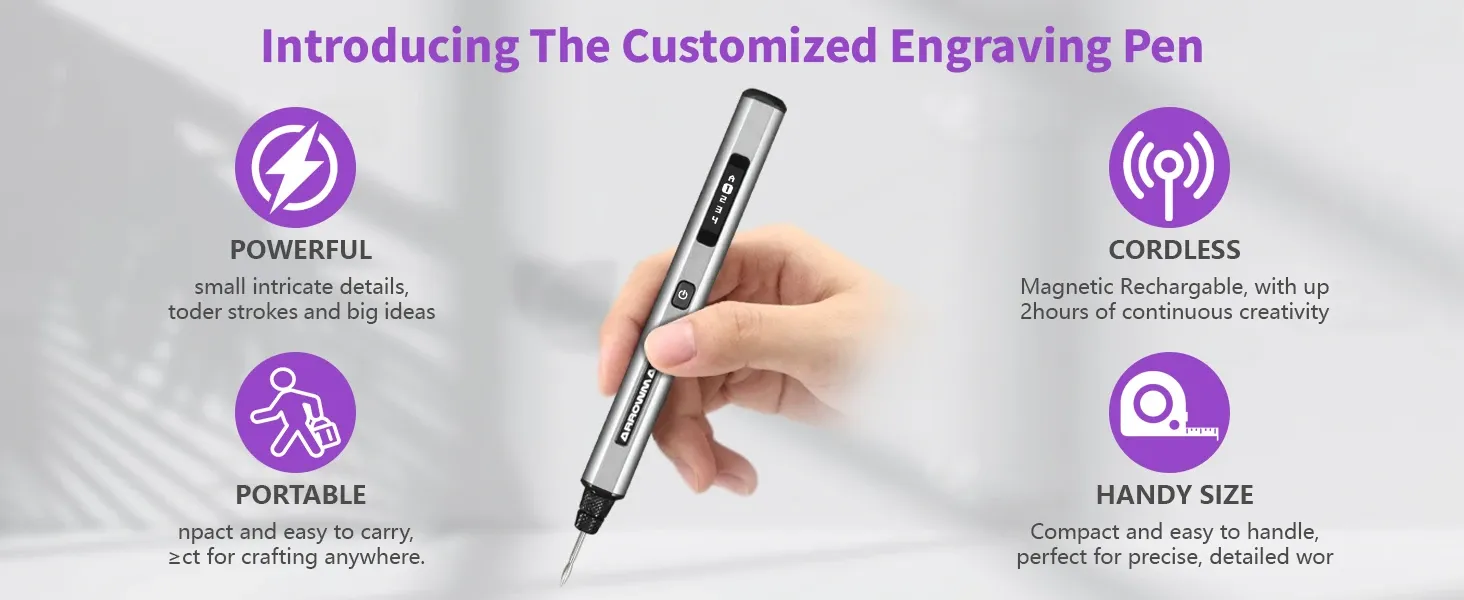
In short: For an Etsy or market-stall business making personalised pet tags and small gifts, a laser engraving machine only pays its way once volume is consistent — entry diode machines start around a few hundred pounds, capable CO2 and fibre systems run into the thousands, and every laser adds ventilation, safety and workspace costs. A cordless engraving pen at £108.53 does the same small-batch personalisation by hand, keeps the "hand-engraved" label honest on your listings, and defers the machine decision until your order book forces it. Here is how to run the numbers.
The decision you are actually making
If you sell personalised dog tags, keyrings or gifts, the laser question usually arrives on a specific evening: an order backlog, sore hands, or a competitor's listing photos with machine-perfect fills. The instinct is that "real" businesses own machines. The useful framing is different — you are choosing between capital equipment that needs volume to justify itself, and hand tooling that earns from the first order.
This guide covers what each laser type genuinely costs and does, then the arithmetic that tells you which side of the line your shop is on.
Laser engraving machine types, honestly summarised
Diode lasers — the entry point
Open-frame diode machines are the ones all over UK marketplaces from a few hundred pounds. They engrave wood, leather, slate and coated metals well. The catches for a tag business: bare polished metal — exactly what most pet tags are — needs marking spray or coatings at hobby-diode power levels, engraving is slow, and an open frame means you must sort out eye safety and fume extraction yourself.
CO2 lasers — the workshop standard
Enclosed CO2 machines cut and engrave organics (wood, acrylic, leather, glass surface-marking) quickly and cleanly. They are the right tool for a product line built on cut shapes and engraved timber. For metal tags they still disappoint: CO2 wavelengths do not mark bare metal without coatings. Realistic budgets start in the low thousands, plus dedicated space and extraction.
Fibre lasers — the metal specialists
Fibre machines mark bare stainless, brass and aluminium beautifully and permanently — this is what industrial tag marking uses. They are also the most expensive class, typically thousands of pounds for a small unit. A fibre laser is the "right" machine for high-volume metal pet tags, which is precisely why it is the wrong first purchase for a shop doing a handful of orders a week.
The arithmetic for a small tag business
Work it through with your own numbers, but the shape is usually this:
- Payback. A machine spend of, say, £2,000+ against a £3–£5 personalisation margin per tag needs hundreds of orders just to break even — before electricity, lens consumables and your setup time.
- Space and safety. Lasers want extraction, eye protection and a workspace that tolerates fumes. A kitchen-table business often cannot host one at all.
- The listing angle. "Hand-engraved to order" is a genuine premium on Etsy — buyers pay for the human mark. Machine-perfect output moves you into direct price competition with high-volume sellers who own faster machines than you can buy.
The pen-first route inverts the risk: £108.53 up front, each order engraved by hand as it comes in, and the laser decision revisited when volume makes the payback maths short. The specifications that make that workable are on the ARROWMAX cordless engraver product page — a hollow cup motor that stays steady on stainless tags, 6,000–25,000 rpm with an OLED readout so brass and aluminium each get their right speed, and magnetic USB charging so an evening batch is never stopped by a dead battery for long. The 42-bit kit covers the carbide and diamond points that stainless, brass and aluminium tags need.
Where each option wins
| Diode laser | CO2 laser | Fibre laser | Engraving pen | |
|---|---|---|---|---|
| Bare metal tags | Poor without coatings | Poor without coatings | Excellent | Good — shallow hand marking |
| Wood/leather gifts | Good | Excellent | Limited | Good at small scale |
| Typical cost | Hundreds | Low thousands up | Thousands up | £108.53 |
| Space/safety burden | DIY enclosure + extraction | Dedicated space + extraction | Dedicated space | A drawer |
| Batch throughput | Moderate | High | High | Low — one at a time |
| Listing story | Machine-engraved: uniform, fast | Hand-engraved: individual, premium | ||
One adjacent option to know about: dedicated rotary machines (the Gravograph class) sit between these worlds for plate and trophy work — our gravograph engraving machine guide covers when that equipment class earns its keep.
When you genuinely should buy the laser
- Your backlog is consistently more than you can hand-engrave in your evening sessions, week after week.
- Your product line depends on cut shapes or large filled designs a hand tool cannot produce.
- You have the space and ventilation for an enclosed machine, and the payback maths clears within months on your real order volume, not hoped-for volume.
When those are true, buy the machine class that matches your material — fibre for bare metal, CO2 for organics — and keep the pen for one-offs, curved items and repairs. Until they are true, the pen keeps your margin and your "hand-made" positioning intact. For hand technique on steel and brass tags, our guide to how to engrave metal at home covers burr choice and speed settings step by step.
Frequently asked questions
Can a laser engraving machine mark stainless steel pet tags?
Fibre lasers mark bare stainless permanently and are the industrial standard for it. Diode and CO2 machines generally need marking sprays or coated tags. A rotary pen with a carbide or diamond burr cuts a shallow, legible mark by hand.
How much does a laser engraving machine cost in the UK?
As a class: entry diode frames start around a few hundred pounds, enclosed CO2 workshop machines run from the low thousands, and fibre units for metal marking cost thousands. Extraction, safety kit and consumables come on top, so price the whole setup, not the listing headline.
Is hand-engraved or laser-engraved better for an Etsy shop?
They sell different things. Laser output is uniform and fast; hand engraving carries the individual character that personalisation buyers pay a premium for. Small shops usually keep the premium and defer the machine cost.
Does engraving on pet tags last?
Cut engraving — by hand burr or fibre laser — is a physical groove and outlasts printing or surface marking. On soft aluminium tags, expect wear over years of jangling against a collar ring regardless of method; stainless and brass hold marks longest.
What does UK law require on a dog tag?
The Control of Dogs Order 1992 requires a dog in public to wear a collar with the owner's name and address on it or on an attached tag — house number and postcode are widely accepted as sufficient address detail. That legal floor is exactly why personalised tags sell steadily.
Building your tag business one order at a time? The ARROWMAX cordless engraving pen — hollow cup motor, OLED speed display, magnetic USB charging, 42 bits for stainless, brass and aluminium — is £108.53 with free UK delivery, 30-day returns and a 12-month warranty.
Ready to try ARRWMXLE?
Shop Now — £108.53