Best Engraving Pen UK: An Honest Buyer's Guide
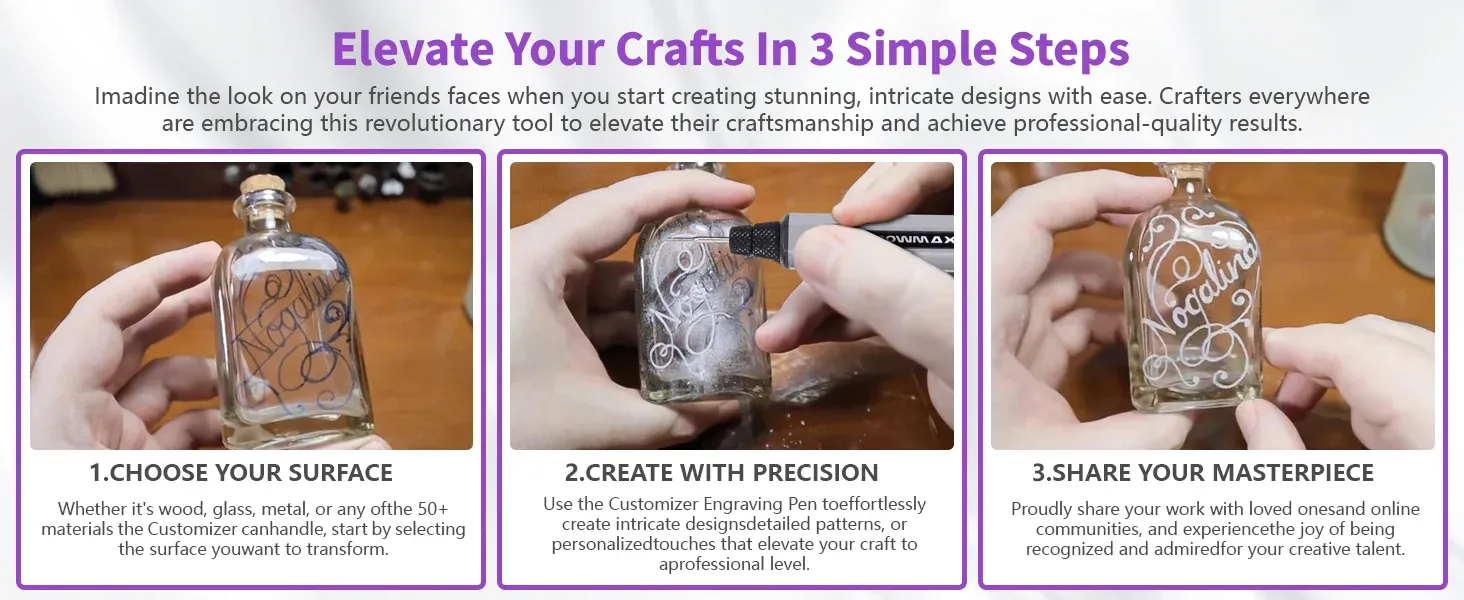
TL;DR: The best engraving pen UK buyers can get in 2026 is a cordless model with true variable speed (roughly 6,000–25,000 rpm), a motor that stays steady on metal, and a bit kit that covers carbide and diamond profiles. Pens under £20 routinely fail on stainless steel; a mid-range tool such as the ARROWMAX cordless engraver (£108.53, 42 bits, OLED speed display) sits in the band where the hardware genuinely changes. If you produce batches daily, a bench machine or laser is the better spend — this guide is honest about that boundary.
Why the £15 pens keep disappointing people
If you have already been burned by a cheap engraving pen from a marketplace listing, the failure you experienced is predictable. Most sub-£20 "engraving pens" are built around the same small vibration or fixed-speed motor: they buzz like an electric toothbrush, skate across stainless steel instead of cutting it, and the unbranded tips dull after a glass or two. The listing photos show crisp lettering on brass; the tool in your hand leaves a scratchy, wandering line.
Three hardware gaps explain almost all of it:
- No real speed control. One fixed speed is always wrong for something — too fast for glass, too weak for steel. Cutting cleanly needs the rpm matched to the material.
- Weak, wobbly motors. Cheap DC motors lose torque the moment the tip meets resistance, which is exactly when you need steadiness. That is what "it just slides off the metal" means mechanically.
- Filler bits. A bag of identical soft tips photographs well. What you actually need is a spread of carbide and diamond profiles in different shapes — ball for lettering, cone for detail, cylinder for clearing.
None of this means you need to spend hundreds. It means the cheapest tier is structurally unable to do what its listings promise.
What a sensible budget actually buys you
In the UK market, the useful cordless engraving pens sit roughly between £60 and £130. Below that band you are buying the fixed-speed toys described above; far above it you are paying for production features a hobbyist rarely uses. Within the band, prioritise in this order:
- Variable speed with a visible readout. A range of about 6,000–25,000 rpm covers glass at the low end and soft woods at the top. A display matters more than it sounds: once you find the speed that works on a pet tag or wine glass, you can dial it back in exactly next time.
- A motor designed for smoothness. Hollow cup motors run with noticeably less vibration than standard cheap DC motors, which shows up directly in how straight your lines come out on metal.
- A genuinely varied bit kit. 30+ bits with distinct carbide and diamond profiles let you test line weights and materials before you commit to buying specialist burrs.
- Charging you will not fight with. Magnetic USB charging has no fiddly port to wear out, and a pen that charges beside you means a flat battery never ends the session for long.
How the ARRWMXLE pen compares with a Dremel
The comparison almost every sceptical buyer researches — sensibly, because Dremel is the known quantity. An honest breakdown:
| Dremel-style tools | ARROWMAX cordless engraving pen | |
|---|---|---|
| Format | The classic Dremel engraver is a mains-powered reciprocating tool; multi-tools are larger rotary units gripped like a fat torch | Pen-shaped rotary tool, 126 g and 149 mm long — held like a thick fountain pen |
| Control on small work | Strong, but the bulk and cable work against you on curved or fiddly pieces | The pen grip is the point: signatures, pet tags and glass curves are wrist work, not arm work |
| Power ceiling | Higher — a mains multi-tool will grind, cut and sand jobs no pen should attempt | Engraving and light polishing only; it is not a grinder and does not pretend to be |
| Ecosystem | Huge accessory range sold separately | 42 bits included in the aluminium case; standard-shank burrs widely available |
The honest verdict: if you already own a Dremel multi-tool and mostly do coarse work, keep it. If your projects are names, dates and fine lines on gifts, tools and tags, the pen format is simply the right shape for the job — that is the reason to switch, not brand loyalty.
Is a 42-bit kit real value or padding?
A fair question from anyone who has opened a pouch of identical grey tips. The test is variety, not count. The ARROWMAX kit spreads its 42 pieces across diamond-coated burrs for glass and hard metal, carbide profiles for lettering, and polishing heads — which is what lets one tool move between a brass keyring, a jam-jar gift and a toolbox stencil. Two practical notes from the spec sheet rather than the marketing copy: the pen runs a 500 mAh lithium battery with magnetic 5V/1A USB charging, and the whole kit ships in an aluminium case that keeps 42 small parts findable. It currently sells for £108.53 with free UK delivery, a 30-day returns window and a 12-month warranty — the returns window is the practical answer to "is this another rebadge": test it on scrap steel in week one.
Buyer-review reality check: the pen holds a 4.8-star average across 300 reviews on the product page, and the recurring theme is control on metal — the exact thing the cheap tier fails at. You can inspect the full specification list on the ARROWMAX cordless engraver product page.
When an engraving pen is the wrong buy
Being honest about limits is the fastest way to avoid a second disappointing purchase:
- Batch production. Ten identical serial plates a day is machine territory — our laser engraving machine guide covers when that spend starts to pay.
- Deep marks in hardened steel. A rotary pen makes shallow, legible marks in hard alloys; it will not sink deep grooves into a hardened chisel face.
- Large-format artwork. Panel-sized designs need a frame or CNC gantry, not a hand tool.
For everything hand-sized — gifts, tags, tools, glassware — the pen is the sensible first and often only purchase.
Match the tool to your material
Technique differs more by material than by brand, so we keep the deep dives separate: the glass engraving tool guide covers safe speeds for glassware, the wood engraving tool guide covers grain and scorch control, and our walkthrough of how to engrave metal at home covers burr choice and speed settings for steel, brass and aluminium.
Frequently asked questions
Are cheap engraving pens any good?
Below about £20 the answer is consistently no for metal and glass: fixed speeds and weak motors make the tip skate rather than cut. They can scratch soft aluminium labels acceptably, which is the narrow use they suit.
Can an engraving pen really engrave stainless steel?
Yes, with the right setup: a sharp carbide or diamond burr, a higher speed setting and light repeated passes. Expect legible, shallow marking rather than deep grooves — that is normal for every handheld rotary tool, not a defect.
What speed range should an engraving pen have?
Look for roughly 6,000–25,000 rpm. The low end is what keeps glass from chipping and skidding; the top end cuts soft wood cleanly. A single fixed speed cannot do both, which is the core failure of budget pens.
Is an engraving pen better than a Dremel for small projects?
For fine lettering and curved surfaces, generally yes — the pen grip gives you finger-level control a palm-sized multi-tool cannot. For grinding, cutting and coarse sanding, a multi-tool remains the better machine.
How do I know a mid-price pen is not a rebadged cheap one?
Check for the three things the cheap tier never has: a stated rpm range with a visible display, a named motor type, and a bit kit listing distinct carbide and diamond profiles. Then use the returns window to prove it on scrap before your first real project.
Ready to stop replacing disappointing tools? The ARROWMAX cordless engraving pen — hollow cup motor, OLED speed display, magnetic USB charging and 42 bits in an aluminium case — is £108.53 with free UK delivery, 30-day returns and a 12-month warranty.
Ready to try ARRWMXLE?
Shop Now — £108.53